Blog
Drone vs. Tractor: What Okanagan Orchard Growers Need to Know
Published by D.Day | AG Drones Inc. | West Kelowna, BC
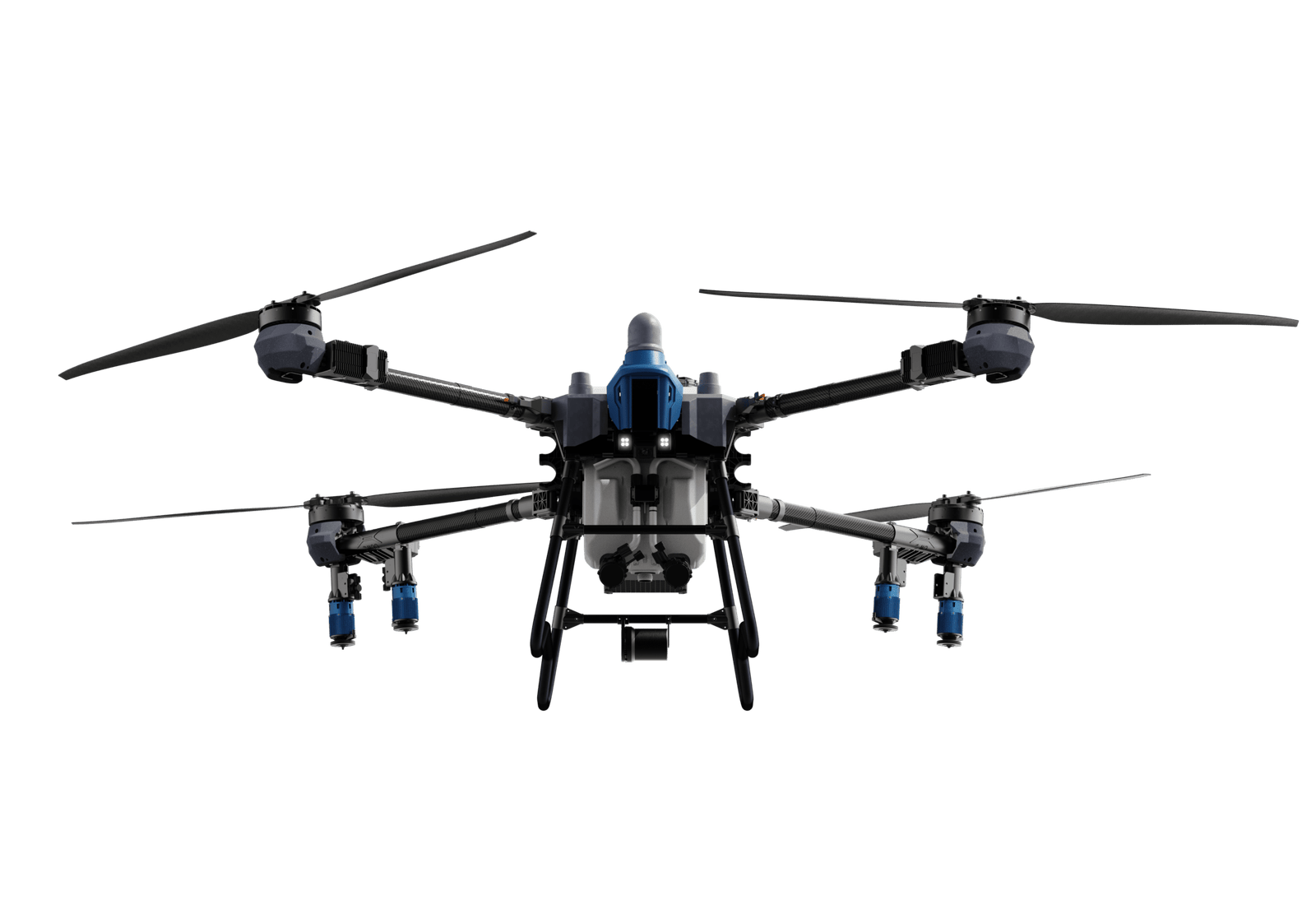
The question comes up on every demo. A grower walks the edge of a steep cherry block, watches the EA-J150 complete a pass in under two minutes, and asks: "But how does it actually compare to what I've been running?"
It's the right question. And the honest answer is - it depends on what you're comparing, and what you're trying to solve.
This isn't a piece that tells you to throw away your airblast sprayer. It's a frank look at where each tool wins, where each one falls short, and how Okanagan growers specifically are using both together to get results neither could achieve alone.
For BC growers working steep Okanagan slopes, tight orchard rows, and fields that are routinely too wet or inaccessible for ground equipment, this is a significant shift. Here's what it means, what the rules actually say, and what you need to know before you put a drone in the air.
The Ground Reality in Okanagan Orchards
Before we compare machines, let's talk about the terrain.
A lot of Okanagan orchards were planted before anyone was thinking about equipment access. Rows run up and across slopes that reach 30–50 degrees. Blocks are split by gullies, rocky outcroppings, and tight terrace walls. After any significant rain event - and 2025 and 2026 have delivered plenty - ground equipment simply can't get in without causing real damage: rutting, compaction, broken drip lines, knocked trees.
That context matters. A lot of the drone vs. tractor debate happens on flat ground, in wide-row blocks, where a tractor genuinely wins on cost per acre. That's not where most of the hard conversations are happening in the Okanagan.
Head-to-Head: What Each Tool Actually Does Airblast Sprayer (Tractor-Mounted)
- The Okanagan standard for decades. A PTO-driven fan generates a high-velocity air stream that carries droplets into the canopy from the sides. Well-understood, reliable, and still the workhorse for most operations.
- Where it wins:
Low operating cost per acre on flat, accessible blocks (typically $8–$18/acre for custom application, depending on product and terrain) - High tank capacity means fewer refill stops on large contiguous blocks
- Familiar to operators - most crews have years of experience calibrating and troubleshooting
Well-documented efficacy with every registered crop protection product - Where it struggles:
- Needs a solid, trafficable surface - wet ground means you wait or cause damage
Soil compaction is real and cumulative over a season. Heavy equipment making 6–12 passes per year is measurably impacting root health in many Okanagan blocks
Steep or irregular terrain creates access problems and safety risks for operators
Coverage inside a dense canopy depends heavily on speed, fan calibration, and tree architecture - and it's hard to verify without dye testing
Agricultural Spray Drones (EA-J70 / EA-J150)
A rotary-wing aircraft that carries a liquid or granular payload, follows a pre-mapped autonomous flight path, and applies product via boom nozzles directly over the crop canopy. The downwash from the rotors - typically 8–12 m/s directly downward - penetrates the canopy from above and pushes droplets into the leaf structure.
Where it wins:
Zero ground contact - zero compaction, zero soil disturbance, zero risk of rutting after rain
Terrain access is essentially unlimited. Slopes, gullies, terraces, post-rain mud - none of it is a constraint
Under-canopy penetration from rotor downwash is genuinely different from airblast. Droplets are pushed down through the top of the canopy, reaching both leaf surfaces and interior fruit in ways that side-blown application often misses
Speed and autonomy: the EA-J150 covers 40–60 acres/hour on open ground; the EA-J70 covers 40–50 acres/hour. One operator can supervise multiple batteries cycling
No operator exposure to product during application - the pilot is on the ground, well clear
Applicable the same day it rains - no waiting for the ground to firm up
Where it struggles:
Per-acre service cost is higher than tractor spraying on flat, easy-access ground. Our orchard service rates run $35–$42/acre for spray application, compared to $25–$35/acre for a tractor custom applicator on comparable conditions. The gap closes significantly on difficult terrain and reopens when terrain is easy.
Tank capacity is smaller - the EA-J150 carries 73 L; the EA-J70 carries 45 L. High-volume programs require more refill cycles on large blocks
Effective swath width needs to be tested in your specific conditions. A drone flying over a dense Spartan apple canopy covers a narrower effective width than the same drone over bare ground or young plantings. Don't assume - test
Water volume is non-negotiable. If your aerial label specifies a minimum volume per acre, the drone doesn't change that requirement. Applications need to be planned accordingly
Weather sensitivity: drones don't fly well above ~20–25 km/h winds. In Okanagan summer afternoons, this can cut operational windows.
The Real Cost Comparison
Scenario Airblast Sprayer Drone
Flat block, full access, good conditions ✅ Cheaper per acre ⚠️ Higher per-acre cost
Steep block (>20° slope) ⚠️ Slower, risk of rollover ✅ No terrain constraint
Post-rain application ❌ Ground too soft ✅ Same-day application
Dense canopy penetration needed ⚠️ Depends on calibration ✅ Rotor downwash penetrates top-down
Chemical reduction opportunity ⚠️ Difficult to target ✅ Zone-specific prescription mapping
Soil compaction concern ❌ Cumulative over season ✅ Zero soil impact
Operator chemical exposure ⚠️ Proximity during application ✅ Remote operation
Labour required 1–2 operators + equipment 1 operator (autonomous flight)
The honest breakeven on drone ownership for a BC orchard grower: if you're spraying 1,000+ acres per season across your own blocks, ownership starts to make financial sense, especially when you factor in the cost of soil compaction damage over time (which rarely shows up on a per-acre spray cost, but absolutely shows up in yield). Below that threshold - or if you don't want to manage the certification, maintenance, and battery cycles - hiring a custom drone applicator is almost always the more practical call.
What Changes When You Use Both
The most effective operations we're seeing in the Okanagan aren't choosing between drones and tractors - they're using them for different jobs.
The drone does the early-season and post-rain passes - the ones where ground conditions are marginal, where canopy is filling in and penetration matters, where you need to move fast before a disease window opens. It also handles the steep blocks and the terraces that a tractor can't safely reach.
The tractor handles the high-volume, flat, accessible blocks in ideal conditions - mid-season programs on easy ground where per-acre cost matters most and there's no terrain or timing pressure.
The result: fewer compromised applications, fewer skipped passes because of wet ground, and better canopy coverage at the moments when it counts most - early in the season when canopy is open, and after rain events when disease pressure is highest.
The Compaction Conversation
One thing worth saying plainly: soil compaction in Okanagan orchards is underestimated as a cumulative problem.
A fully loaded airblast sprayer can exceed 8,000 kg. Running that down orchard rows 8–12 times per season, year after year, compacts wheel tracks progressively. Root exploration is restricted in the compacted zones, water infiltration drops, and tree vigour in those rows gradually diverges from less-trafficked sections of the same block. The effect accumulates over years, not one season - which is why it rarely shows up in year-over-year cost comparisons, but absolutely shows up in long-term yield data.
A drone weighs nothing to the soil. There is literally zero wheel-track compaction. For mature orchards in their 15th–25th year of tractor passes, this isn't a trivial consideration.
Specific Okanagan Crops: Where Drones Fit Best
Cherries: The narrow window between bloom and harvest, combined with extreme disease pressure (brown rot, powdery mildew) in wet years, means timing matters more than cost per acre. Drones can apply the day after a rain event. Tractors often wait 2–4 days for ground to firm up - and a 3-day delay at the wrong moment in cherry season is a real economic risk.
Wine Grapes: Canopy architecture in trained vineyards is actually quite well-suited to drone application. The top-down rotor wash reaches the upper and interior canopy where botrytis pressure builds. At $18–$28/acre for our vineyard service rate, it's competitive with airblast custom application on any block with challenging terrain or a timing requirement.
Tree Fruit (apple, pear, peach): The combination of dense canopy and steep terrain in many Okanagan apple blocks is where drone application has the clearest case. The EA-J150's 4–15 m adjustable swath handles both wide-open passes and tight rows without reconfiguration.
Berries: Ground equipment causes real damage in established berry plantings. Drones are a natural fit, especially for early-season disease applications when ground is often too wet for equipment.
Bottom Line
If you've got flat, fully accessible blocks with no timing pressure and no terrain constraints - your airblast sprayer still wins on cost per acre.
If you've got any combination of steep terrain, wet conditions, timing pressure, soil compaction concerns, or canopy penetration requirements - a drone is the better tool, and the per-acre premium pays for itself in application timing alone.
Most Okanagan growers have both situations on the same operation. The practical answer is usually not either/or - it's knowing which tool to pick up when, and having access to both.
Book a drone demo on your block →
We'll fly a test pass and you can see exactly how coverage compares on your specific trees, in your specific terrain. No pressure - just data.
Call us: 888.818.7014
---
AG Drones Inc. is based in West Kelowna and serves growers across the Okanagan Valley and Interior BC - from Kamloops to Osoyoos. Our pilots hold Transport Canada RPAS Advanced Certification and operate under commercial insurance. We sell EAVISION EA-J150 and EA-J70 spray drones and provide custom drone spraying services for orchards, vineyards, and specialty crops.